
Okay, so check this out—DeFi moved fast, like really fast, and my old wallet felt like dial-up in a fiber world. Wow! At first I kept juggling five different extensions and mobile apps, each one with its own quirks and tiny traps. My instinct said this would get worse before it got better. Initially I thought more wallets meant more safety, but then realized that fragmentation was the real risk: lost approvals, duplicated assets, confusing gas fees across networks. Hmm… something felt off about trusting a dozen tiny UI differences with tens of thousands on-chain. I’m biased, sure, but I’ve been through bad UX and ugly security practices. This is about practical trade-offs, not flexing.
Think about it—you’re swapping on Ethereum, bridging to Polygon, and then wondering why the confirmation looks different each time. Seriously? That’s a recipe for mistakes. Short story: I wanted one place that treated chains like lanes on a highway, not isolated islands. On one hand I wanted the granular control hardware wallets afford. Though actually, on the other hand, I wanted smooth multi-chain routing and transaction simulation so I could see problems before they happened. The middle ground exists. And that’s where a decent multi-chain wallet shines.
Here’s what bugs me about most wallets: they either pretend multi-chain is solved, or they shove a clumsy patchwork under the hood. Wow! The result? Users click through warnings they don’t understand. They sign things blindly. They lose funds to slipped slippage, or worse—malicious approvals. My gut reaction to that is: no thanks. But the analytical side kicks in and asks for specifics: what features actually reduce user error, and how can we measure risk reduction?
Let’s break it down. First, multi-chain support must be seamless. One-click network switching is nice. Medium sentences are useful here because I want to explain without sounding like a spec sheet. Long sentences help me tie together user flows, risk, and developer choices so you can see the trade-offs that matter to power users. Wow!
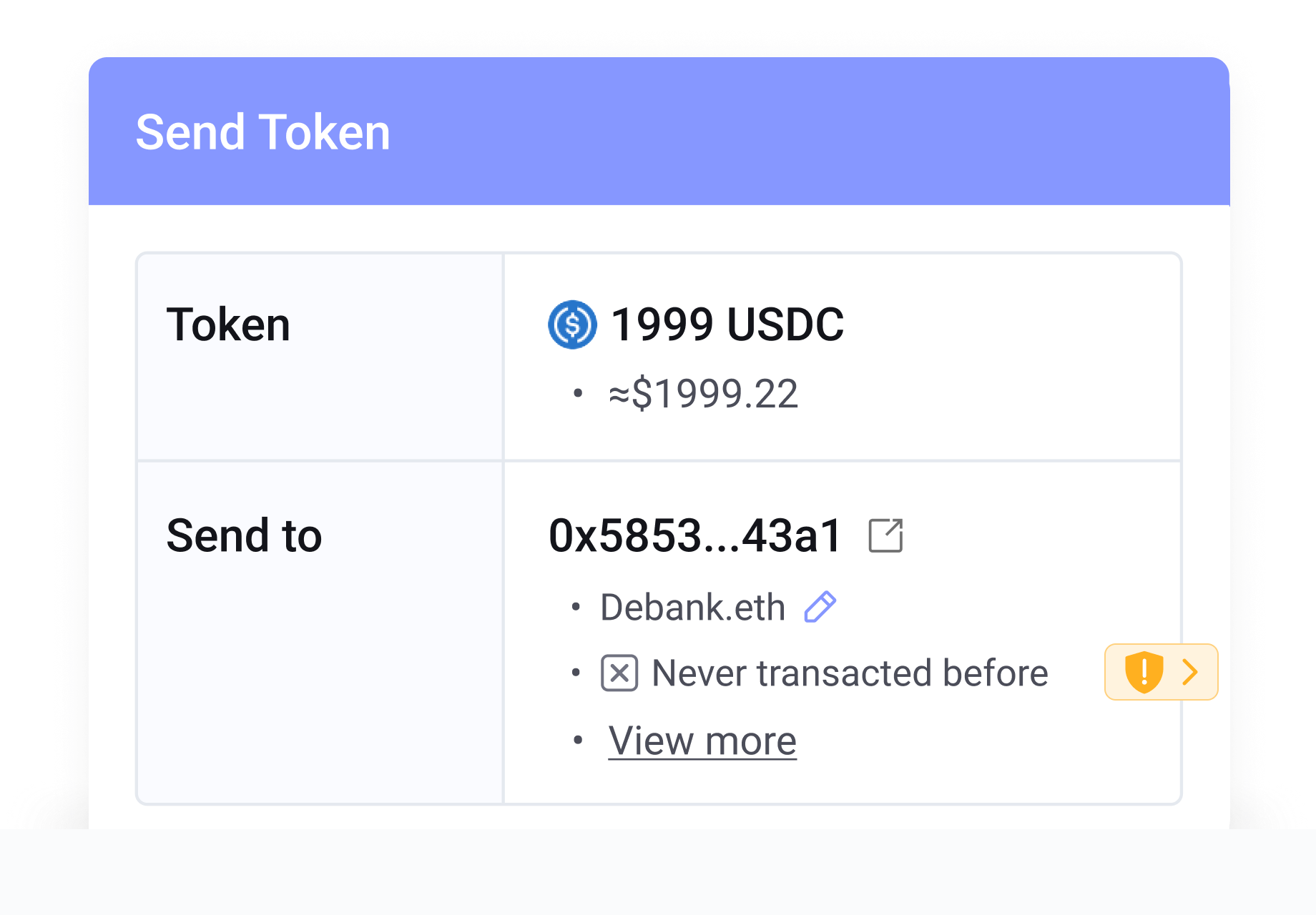
How Transaction Simulation Changes the Game
Here’s the thing. Transaction simulation is the difference between guessing and knowing. Really. You can simulate a swap or a complex contract call and catch failing gas estimations, front-running risks, and even unanticipated reverts before hitting send. Initially I thought simulation would be optional icing. But then I watched a four-transaction batch fail because of a token with a transfer tax—costly. Actually, wait—let me rephrase that: seeing the simulation would have saved the batch. My instinct screamed after that: never sign blind again.
Power users want deterministic outcomes. They want to know slippage, gas, and whether a call will fail. Medium sentences help explain the nuts and bolts; longer ones can explain how a simulation engine interacts with mempools, RPC nodes, and off-chain relayers to predict outcomes, though actually those technical details vary by implementation. Wow! So when a wallet offers per-transaction simulation, it reduces cognitive load and attack surface, because users no longer have to parse raw calldata or third-party aggregator results for hidden behavior.
Also—seriously—transaction simulation helps spot malicious approval patterns. Approving a token with unlimited allowance is a common footgun. Simulation can flag “this approval grants unlimited transfer rights” in plain language. My experience: once you make the risk visible, most people choose safer limits. I’m not 100% sure that all simulators catch every edge case, but they dramatically lower the odds of catastrophic mistakes.
That matters for multi-chain operations, too. A cross-chain bridge may look straightforward until you factor in differing confirmations, finality assumptions, and wrapped token mechanics. Wow! If you simulate the whole flow end-to-end—yes, that can be complex—you get a much better sense of compounded risk than testing each leg separately. My workflow now is: simulate, read, then sign. Somethin’ about that sequence just calms the nerves.
Why I Recommend One Tool for Multi-Chain Management
Look, I love modular toolkits as much as the next DeFi nerd. But at scale, fragmentation costs time and sometimes money. Medium sentences fit here because the point is practical. Longer: when a wallet integrates native multi-chain support, hardware key management, and simulation, you get a single source of truth for allowances, cross-chain balances, and nonce handling—things that, when split across tools, tend to break in obscure ways.
Let me be concrete. Imagine you have tokens on Ethereum, BSC, and Avalanche. You want to run a sequence: approve, swap, then bridge. If approvals live in one extension, swaps in another aggregator, and bridging in a third app, nonce sequences and gas estimation can misalign. Wow! The result can be stuck transactions or worse: accidental double-spend attempts when you speed a transaction up. Integrated wallets avoid those headaches by managing nonces and gas as a coherent flow.
Also, usability matters to security. If the UI buries key safety controls behind obscure menus, people will ignore them. I can’t stress that enough. Medium sentences are honest: UX is not a luxury, it’s a security feature. On one hand, power users want deep knobs and options. On the other, too many knobs can lead to paralysis. The balance is subtle and, to be honest, sometimes annoying to get right. But a well-designed multi-chain wallet gets you both: power when you need it, defaults that protect you when you don’t.
Which brings me to the wallet I now use and that I’d recommend to folks who care about simulated transactions and cross-chain clarity. Check this out—I’ve been using rabby and it’s become my daily driver for multi-chain work. Wow! The simulation tools there show me transaction outcomes and call traces before I sign, and the UI makes approvals and network switches obvious instead of hidden. I’m biased, but you can tell the team thought about real user mistakes, not just shiny features.
When I say ‘daily driver’ I mean it. I connect hardware wallets, I manage multiple accounts, I test new contracts, and the wallet keeps me from making dumb moves. Seriously. The simulation layer, combined with per-contract permission management, reduces anxious double-checking. The alternative used to be me opening a terminal and riffing with eth_call—now I get the gist faster, with fewer errors.
One more practical point: extensibility. A wallet that supports many chains out of the box but also permits custom RPCs and chain parameters is gold for power users who run testnets or sidechains. Medium sentences explain trade-offs; long ones let me say that custom RPCs can introduce latency and reliability issues if you don’t run your own nodes, though for many users reputable public RPCs will be fine. I’m not 100% certain about every RPC provider’s uptime metrics, but I know whether a wallet makes switching easy and whether it warns about poor-performing endpoints.
Security model clarity also matters. Does the wallet simply store keys locally and sign transactions, or does it interact with an external relay? How are nonces managed? What about session approvals, and do they expire? These aren’t sexy questions, but they separate wallets that are “pretty” from those that are trustworthy. Wow! Trustworthy wallets show the lifecycle of approvals and make revocation straightforward.
Okay, so here’s a short checklist I now use before trusting a new multi-chain wallet: does it simulate transactions? Can it manage approvals granularly? Does it support hardware wallets and custom RPCs? Is network switching seamless? And does the UI minimize cognitive overhead for typical DeFi flows? Medium sentences make the checklist clear. Longer sentences show why each item reduces error, cost, or attack surface. Honestly, if a wallet misses more than one item, I treat that as a red flag.
Common Questions from Power Users
How reliable are transaction simulations?
Simulations are generally reliable for catching execution errors like reverts and common gas under-estimates, though they aren’t perfect. Wow! They depend on RPC node accuracy and the mempool state; rare mempool reorgs or off-chain oracle price shifts can change outcomes. My rule: use simulations as a strong signal, not an absolute guarantee. If you’re batching high-value operations, simulate, then test with a smaller amount when possible.
Can multi-chain wallets really simplify bridging?
Yes, they can simplify the UX and the nonce/gas handling, but bridging still carries protocol-level risks like liquidity and smart contract bugs. Medium sentences: the wallet can help you avoid user-level mistakes. Longer: it can’t, however, absolve you of the underlying systemic risks of cross-chain protocols or prevent failures due to external bridge contracts, so use caution and prefer audited bridges with good track records.
To wrap up—though I hate the word ‘wrap’—my view shifted over time from skepticism to cautious optimism. Initially I thought multi-chain wallets were a convenience; later I saw them as a safety tool that reduces human error and streamlines complex flows. The emotional arc here went from annoyed to relieved, and now I’m curious again about how these wallets evolve (oh, and by the way… I check updates religiously). Wow! If you trade across networks, simulate every non-trivial call, manage approvals tightly, and prefer one coherent interface to many, you’ll save time and reduce risk. I’m not claiming perfection. But for me, the trade-offs are worth it. Somethin’ about having clarity before you sign just feels smarter.





 http://monero-wallet.at/ to see a real-world implementation and how wallets can be built around privacy-first principles. I’m not shilling; I’m pointing to something practical that demystified this stuff for me.
